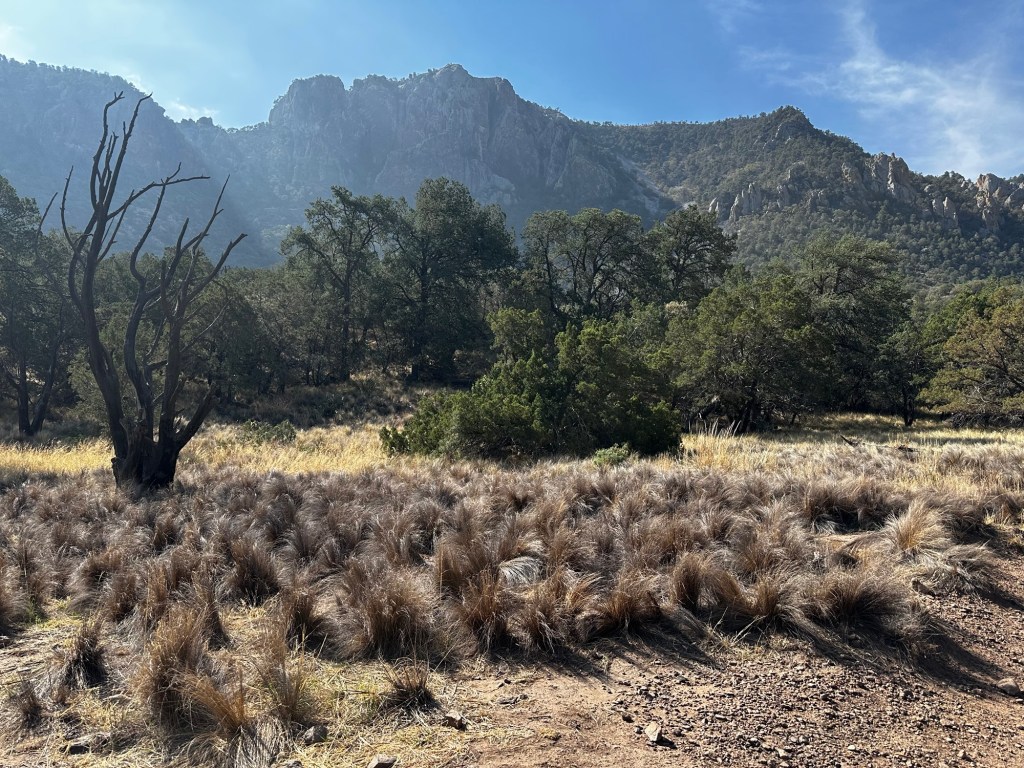
For my latest adventure, I took things to the desert, breaking the 12+ mile South Rim Trail Loop in Big Bend National Park into a two night backpacking trip.
The plan
The South Rim Trail in Chisos Basin can be done as a strenuous day hike for people in better shape than me, but I chose to take my time and break it into a multi-day hike as I continue to build up my backpacking skills.
The tricky part, was that there would not be any water to filter. Anywhere. Which meant I had to carry enough water for three days of hydration, cooking, and washing. By recommended calculations that totaled about 11 liters, because I didn’t have time to say hike part of the way from the end of the trail to cache water (a practice I learned about while researching this trip).
So my plan was to start at the Chisos Basin trailhead, hike counter clockwise, which would take me up the steepest climb of the hike on day one to get it over with; set up camp and drop my stuff, hike up and back from Emory Peak—optionally, because that peak frankly looked terrifying from other people’s videos—then continue on south to the rim overlooking Mexico, before one more overnight on the way back to the trailhead.
A surprise hail storm
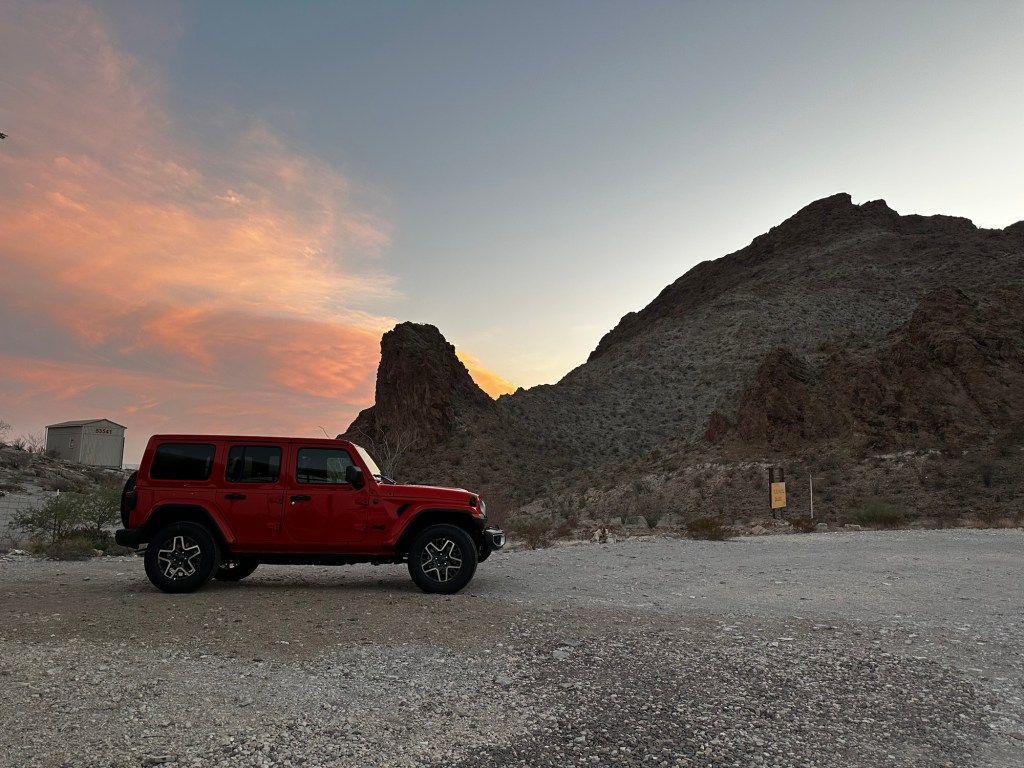
To get to Big Bend, I flew to Midland, Texas and rented an AWD car. I was lucky to be assigned a Jeep Wrangler (a fav), but the guy at the counter told me he was sincerely not trying to upsell me but the forecast showed a possible hail storm and those storms can get really bad in the region. He looked trust worthy and it made me pause, but I didn’t get it.
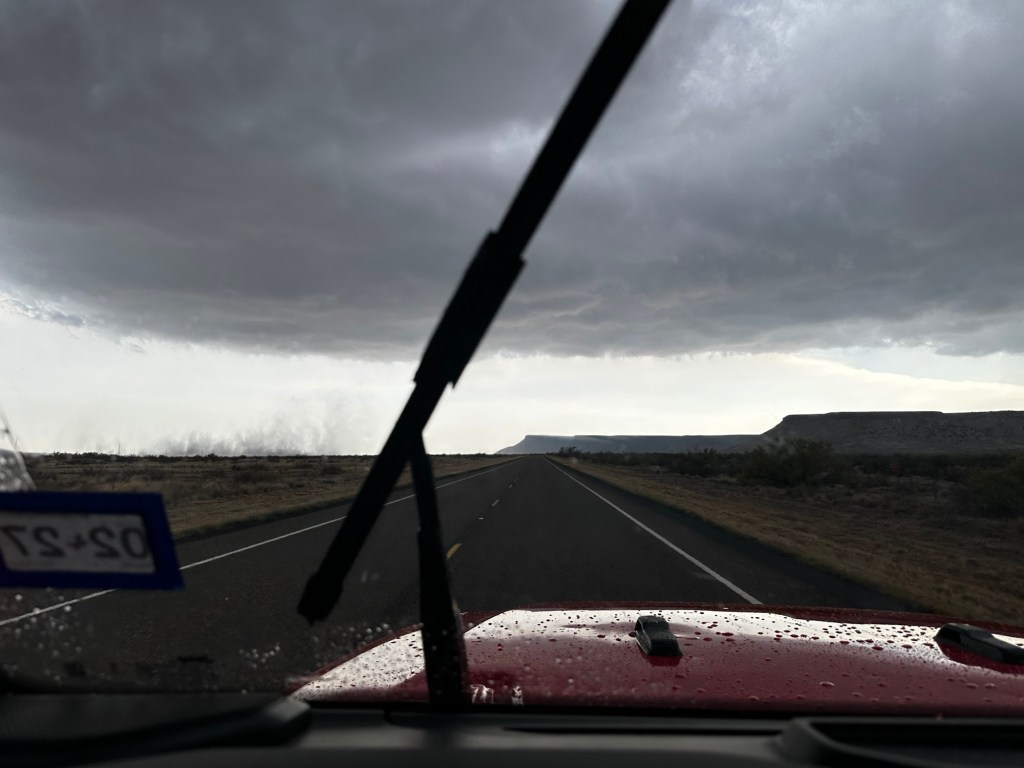
As I drove the four hours from Midland to Terlingua, a town near the park, that storm started rolling in and I realized what he meant. Dark clouds shrouded the sky, and suddenly giant balls of hail started pelting the car, then coming down in such high volume I could barely see in front of me. I regretted not getting the insurance because I could tell the size of the hail could potentially dent the car.
Other cars in the road ahead of me slowed to a crawl and eventually pulled over to the shoulder. But there was barely any cover and I didn’t see how parking and sitting there taking it would improve my situation, so I kept pushing through, hoping to drive through the storm and wondering if I was making an ignorant New Yorker move. In the distance, I saw where the storm ended and kept going toward the light.
Once my concern for the car passed, I started to worry about what this meant for my backpacking trip. If these extreme storms were going to continue in the coming days, I wasn’t sure if my tent could withstand it.
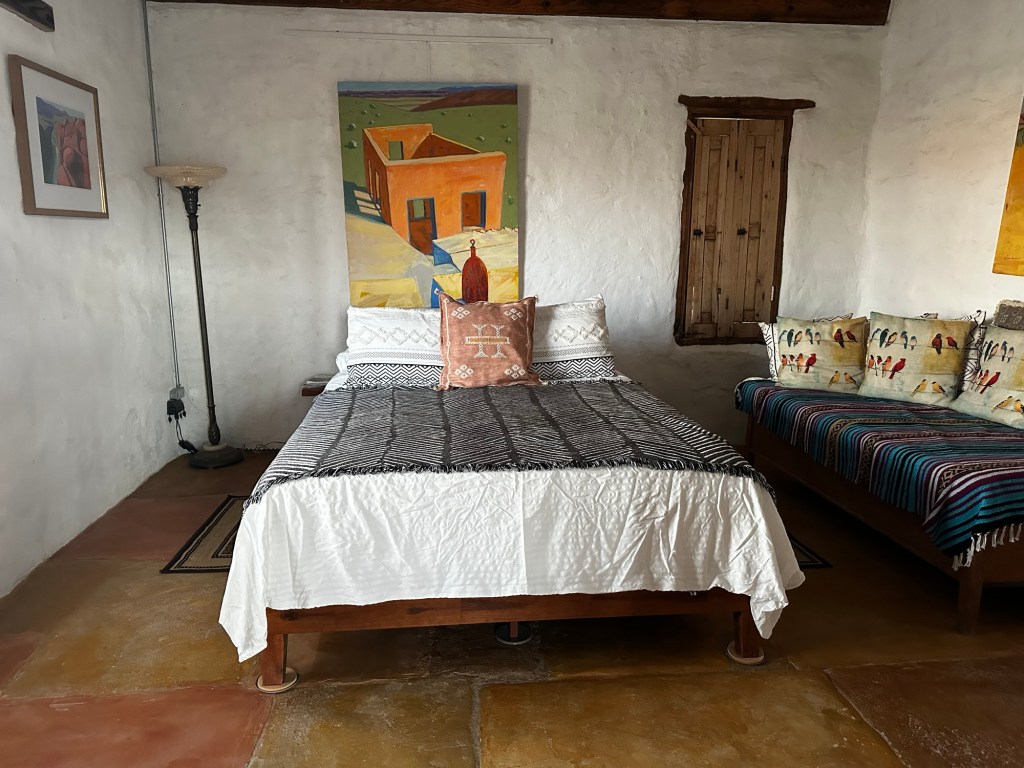
My plan was to stay the night at a cute but primitive eco hut in Terlingua, with no running water, where I could arrange my pack and leave bright and early to get on trail the next day. I use the evening to research my options and figure out whether the tent sites I booked had tree cover and were safe if more hail came, or in case of lightning. ChatGPT was actually helpful—it suggested different campsites all my the trail that I could ask about. Luckily, though the forecast did say there could be more isolated storms, none did ever appear again.
A stunning landscape
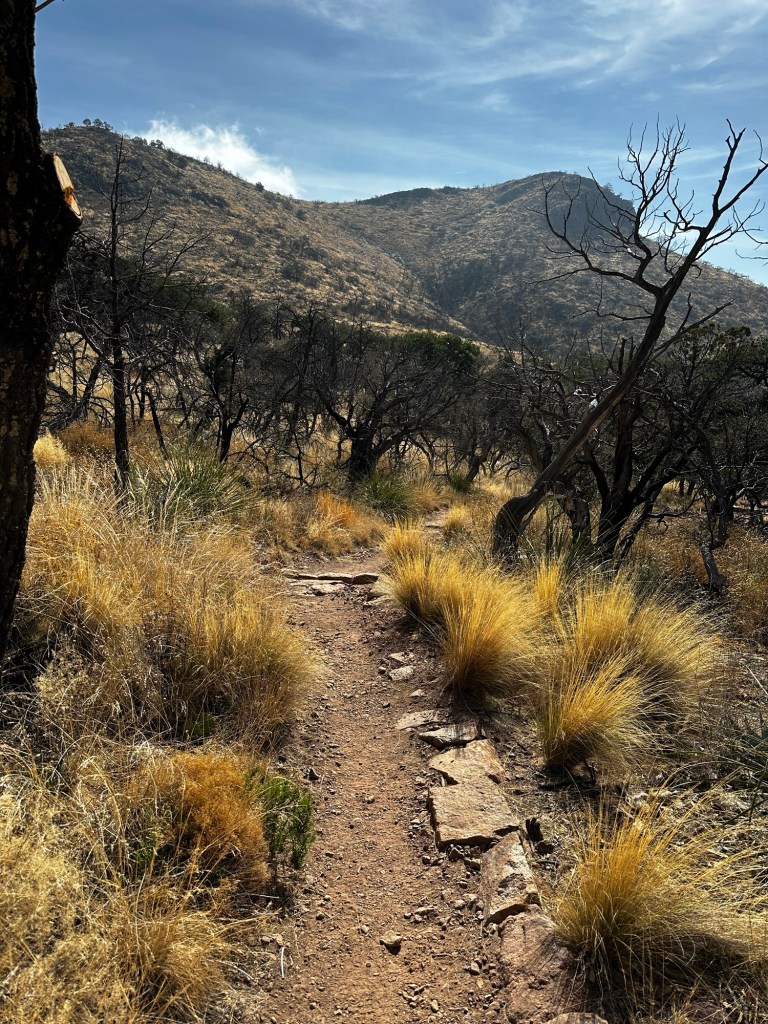
As an east coast person I find southwest landscapes to be amazing as is, but Big Bend National Park is otherworldly. The drive into the park itself is like being on another planet, or on the art of a sci fi movie. Even just the plants alone are fun to look at—it was my first time seeing agave.
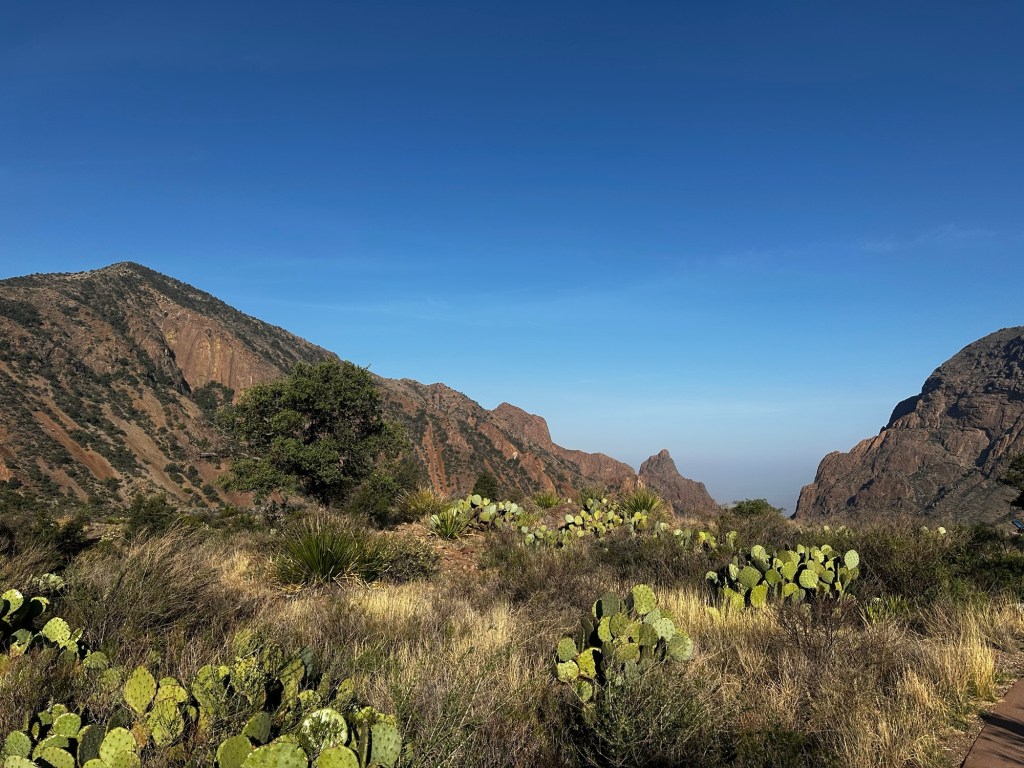
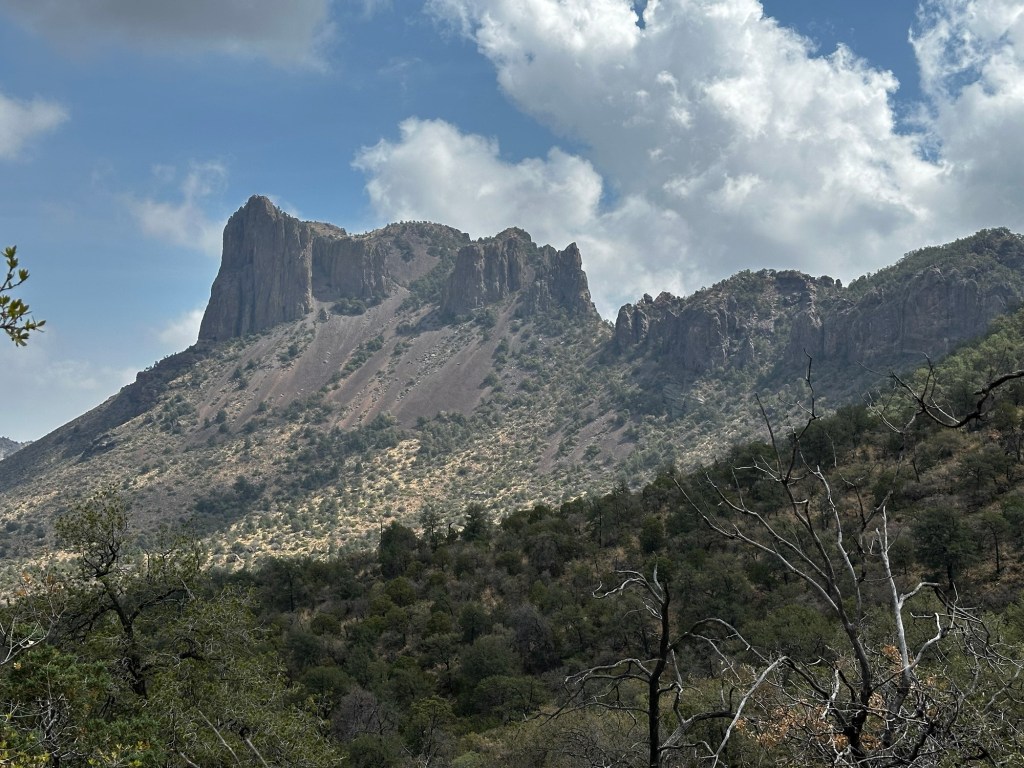
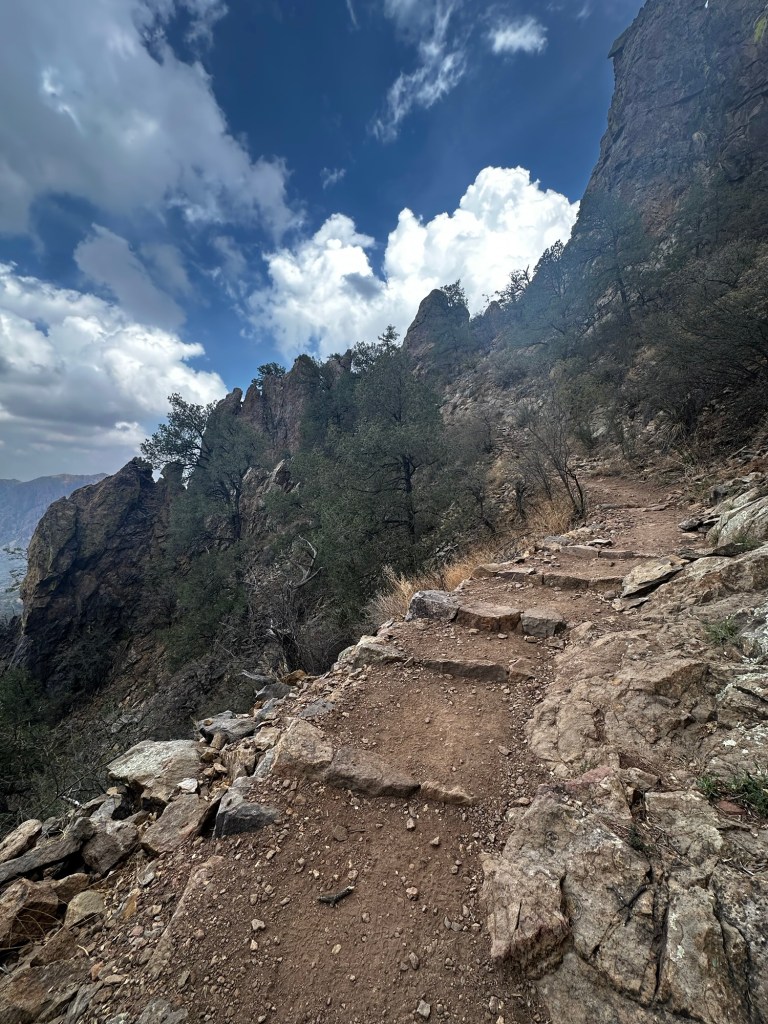
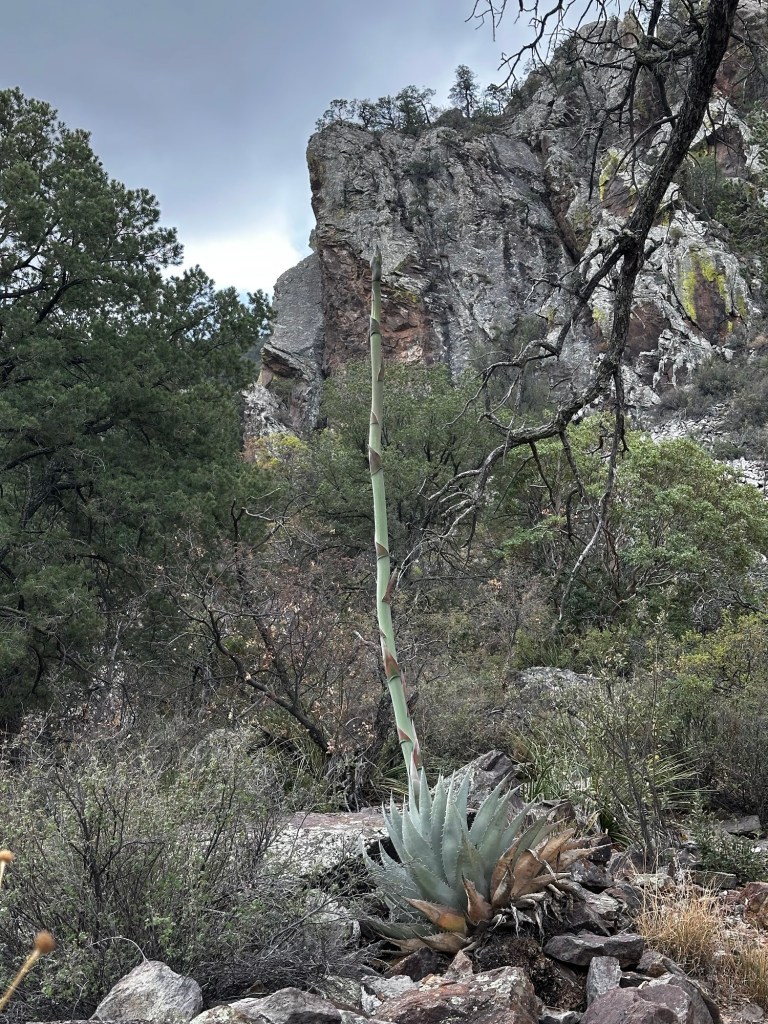
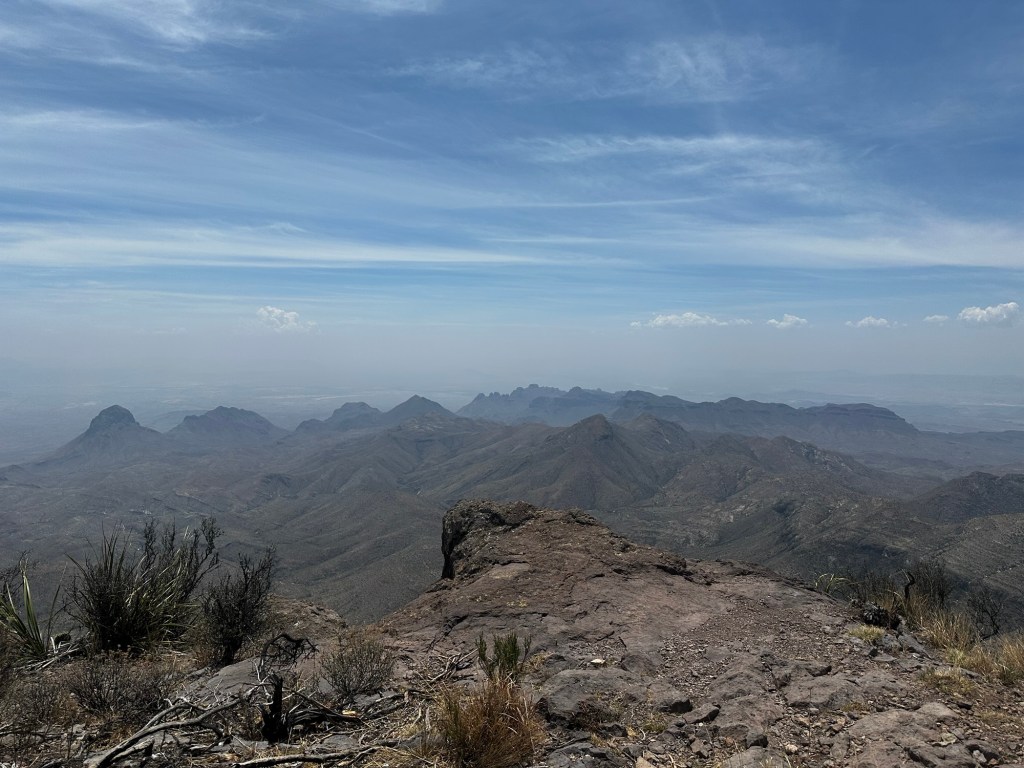
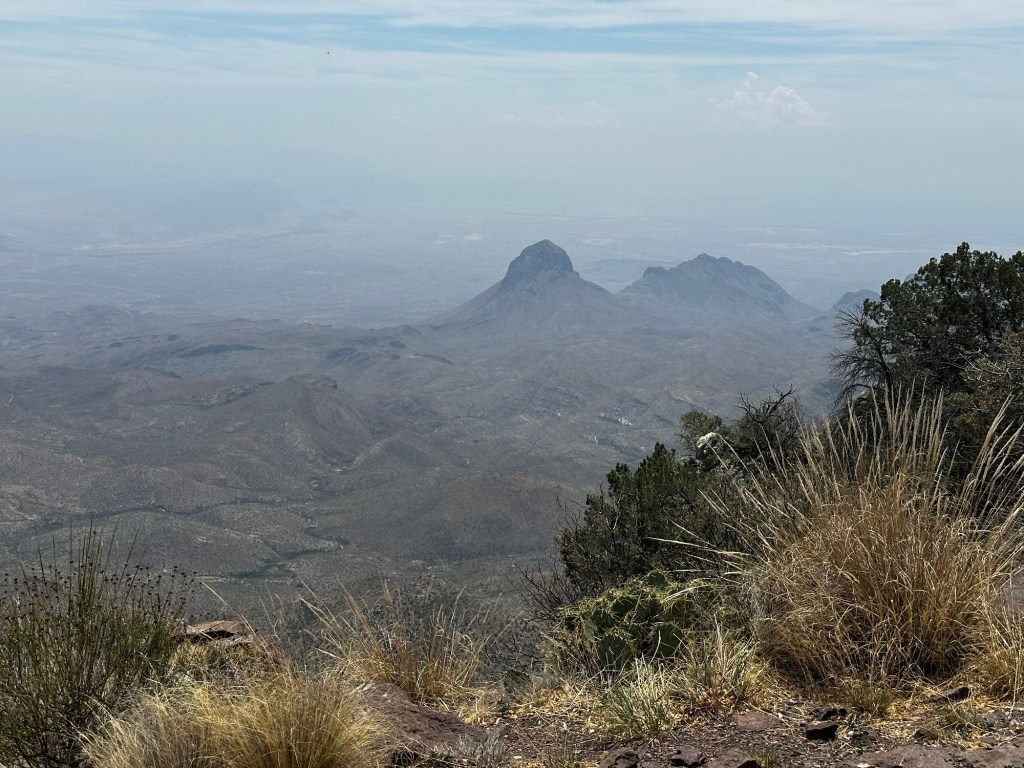
The big reveal on this trail is the view from the south rim of Mexico. When I got there I got my camp chair out to enjoy the view—although it was hot with no cover and I was tired. While there I met a family of women from three generations doing the entire loop as a day hike. They said the grandmother, whom I believe was over 70, was the one pushing them to take these trips.
Desert hiking challenges
I chose to do this loop over two nights ai I could test my gear and my physical ability to hike back to back days sleeping in a tent in between. In this terrain this mean I had to carry all the water I needed for all three days, knowing I’d be hot and thus need even more water to stay hydrated. This amounted to 11L, or over 24lbs of water not counting the containers I carried them in.
I needed to separate the water not just because there’s no good way to carry 11L in your backpack in just one thing —but because I wanted to have contingencies if one of the containers started leaking and I lost water. I split it into one big 4L bag that I clipped to the front of my backpack to balance the weight, two 2L containers attached to the back of my backpack, another 3L bag, and brought a couple of 750ml to 1L bottles to drink out of and mix electrolytes in. All the containers I used were soft and collapsible so that as I used the water up I could roll them up and save space.
I did the trail clockwise so I could get the steepest part of it out of the way on the first day and have gradually easier days from an elevation standpoint. But this also meant I had to carry all my stuff, food AND over 24lbs of water up that ascent. Pretty much no one else I saw was doing it the way I did so people kept stopping and telling me I was hardcore. I didn’t feel hardcore. It was a struggle. I paused after every single switchback. I questioned my life choices.
By the time I got to my campsite I was so tired that I didn’t even bother to stay up to eat dinner or enjoy the sunset over the view that was the reason I booked the campsite. I was too sweaty and hot to have an appetite so I just set up my tent and went to bed, hoping sleep would restore me and alleviate the soreness I was feeling.
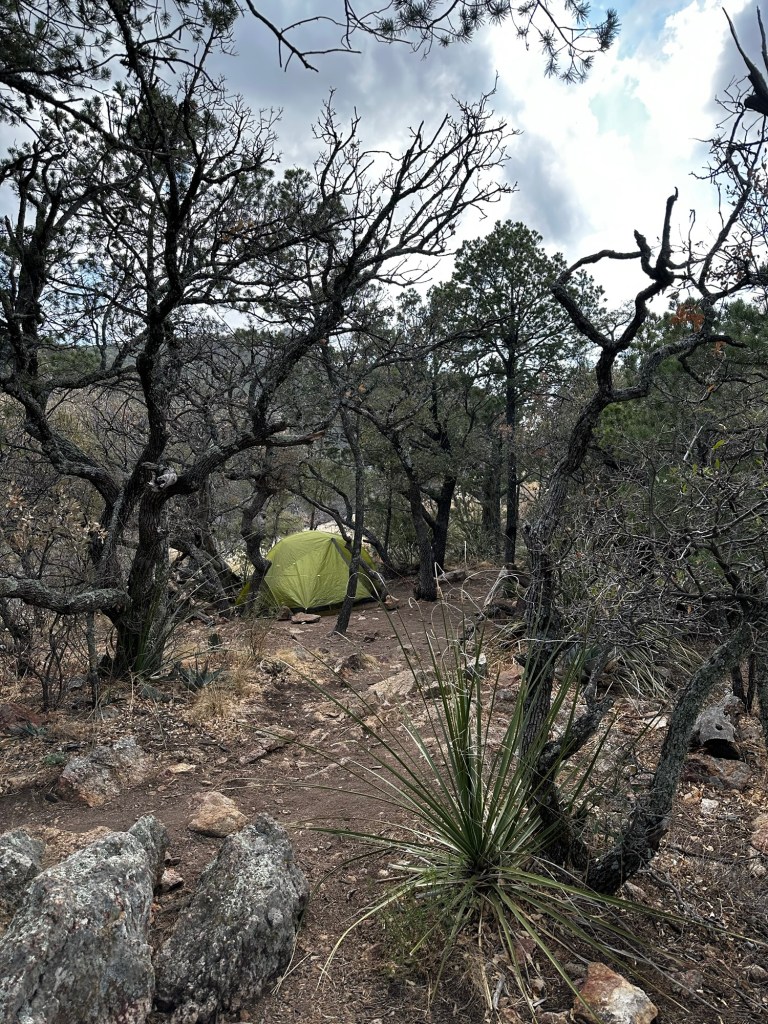
The next morning, I did actually feel better. It helped that it was cool when I woke up (after a very long sleep). I ate my dinner for breakfast and had a cup of coffee before setting off.
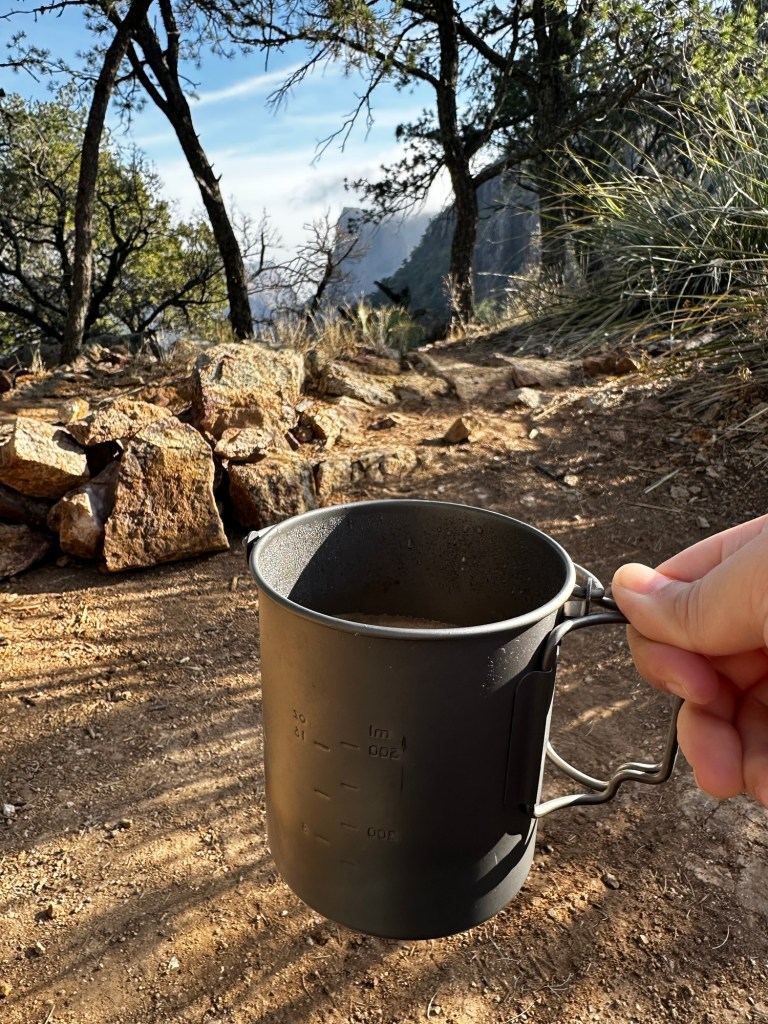
My water rationing pretty much exactly went as planned, and I finished the trail with only a little bit left over on the third day.
Conclusion
I wasn’t really physically prepared for this excursion but I’m glad I did it. I think despite the discomfort I felt I did better than I expected. I also got extremely comfortable with my gear—packing and unpacking multiple consecutive days was good training and I think I’ve overcome the beginner frustration with those things.
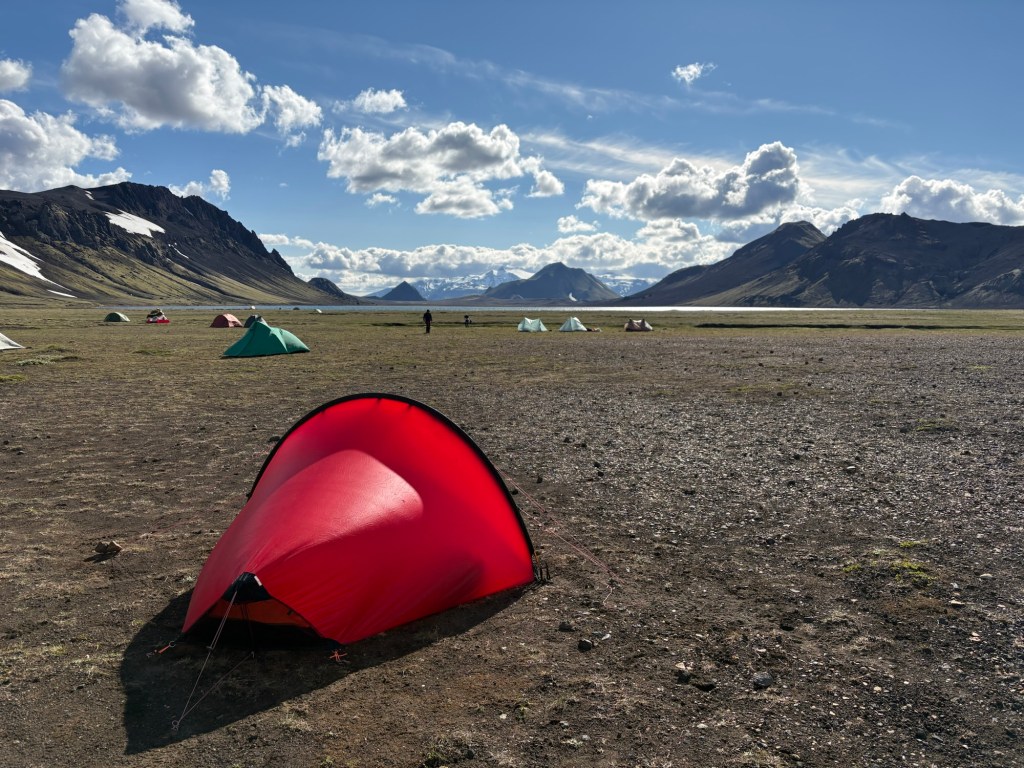
I do think I’m not really yet in the condition to do the Laugavegur Trail in Iceland in a few months, so I’m going to postpone the trip one more year to do some more physical training. And I think I’m definitely going to be back to Big Bend National Park at some point! I want to see the other areas of this beautiful park.



Leave a Reply