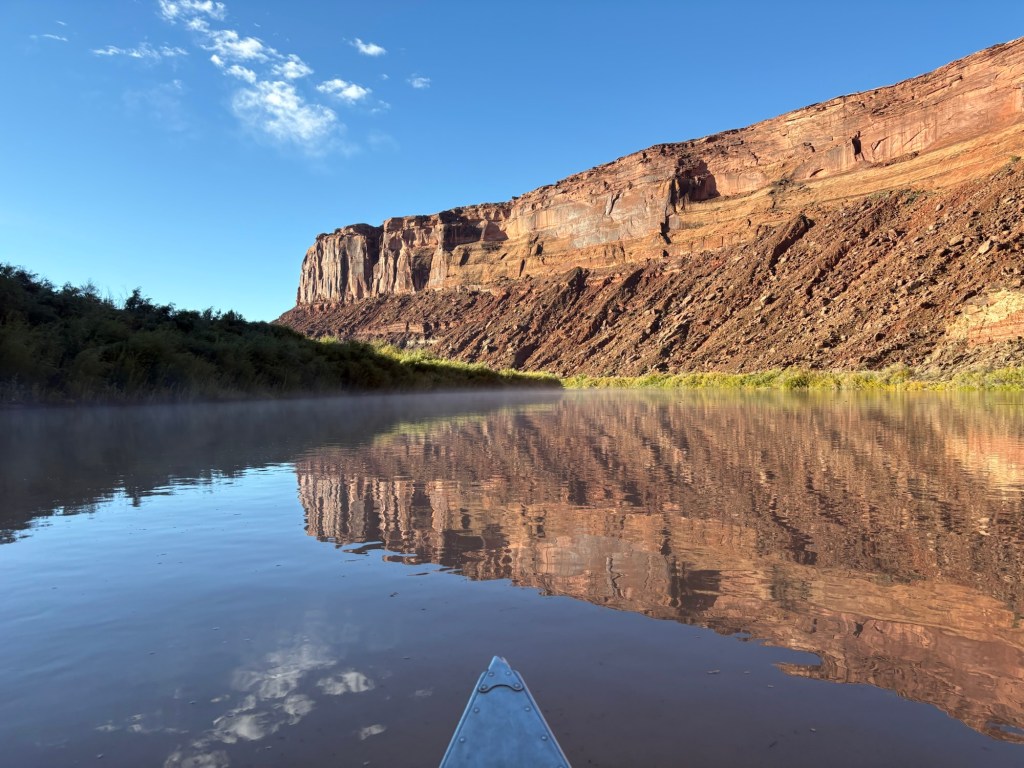
My first canoe camping trip was a significant lesson in remembering that things can always get worse. And yet it was an adventure—which I suppose is why I do any of these things.
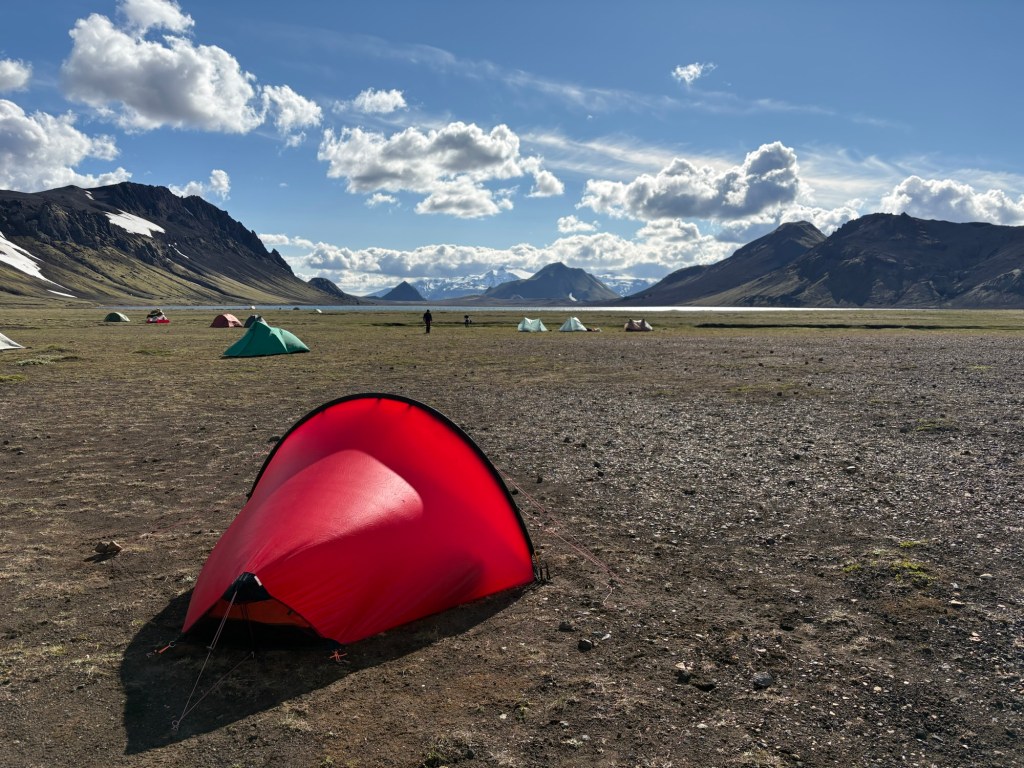
After completing the Laugavegur Trail I was feeling brave and decided to try my hand at canoe camping in Labyrinth Canyon, a stretch of the Green River in Utah that is very remote and promises stunning views. I’ve kayaked before at Horseshoe Bend on the Colorado River and loved that experience, so it didn’t seem like too much of a stretch.
For those who are also totally new to this: when you go canoe camping you can find outfitters, or local companies that will rent you pretty much any gear you need. I went with two friends and we got everything from the canoes themselves to dry bags for our stuff and our trash, ice chests for our food, water jugs, a portable toilet, and more from a great family-owned outfitter called Tex’s Riverways. We brought our own tents, sleep systems, food, and clothing.
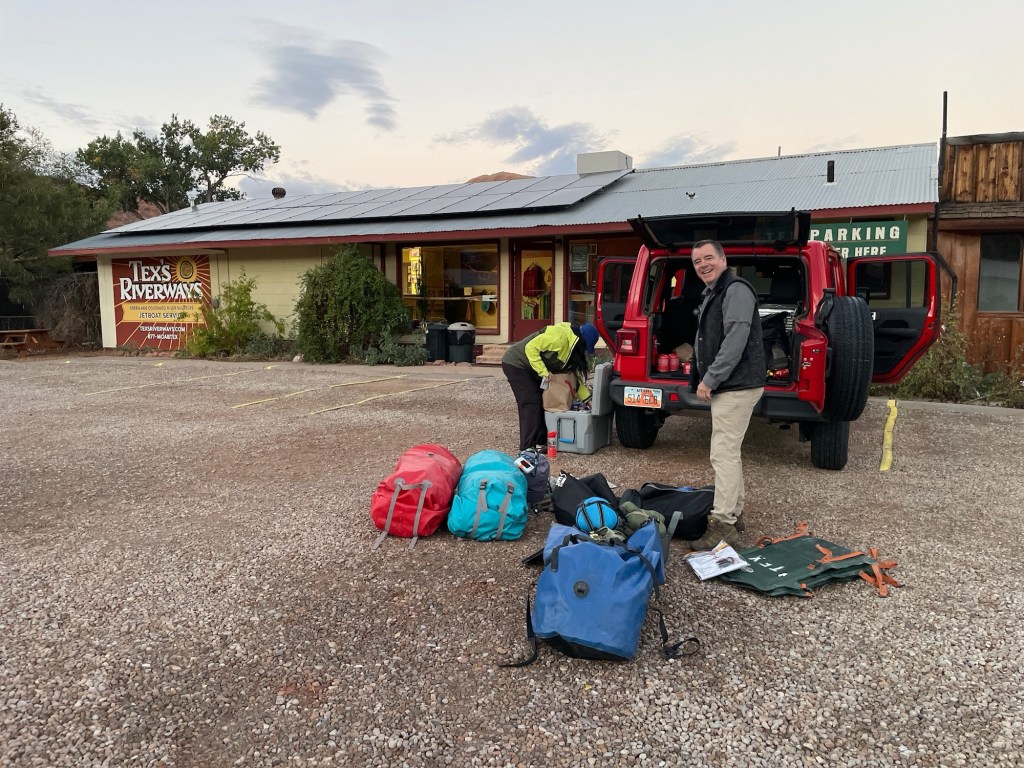
About a week leading to the trip, weather reports started looking sketchy. Remnants of a tropical storm were bringing significant rain. Up through the day we launched, forecasts showed it would rain for the first two days of our 3.5 day paddle. I stayed in close touch with Tex’s, asking if their recommendation to launch changed day to day.
At first, they seemed unworried but recommended we switch from our planned one canoe + one kayak to two canoes connected by a T-CAT. Then, the day we headed to Utah, they called to say things were crazy, mostly due to the access roads to get folks to and from the river. We could still launch, but we might need to change our endpoint or route. ChatGPT suggested I pre-approve extensions for the car rental just in case, and I gave my family all of my reservation information for my post-trip hotel room and flight so that if we needed to make changes, I could satellite message them to help.
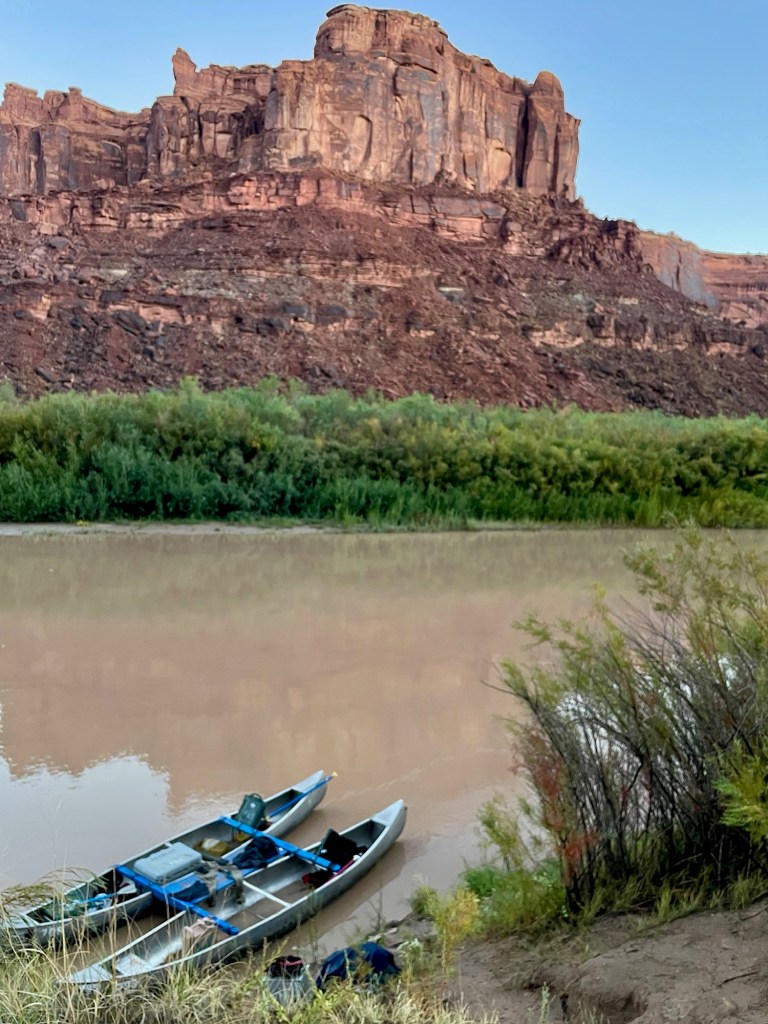
My trip mates were comfortable moving forward and felt ready for a couple of days of rain, so we went ahead and did it. Tex’s gave us a list of high ground campsites because everything else was flooded—this changed our itinerary quite a bit because the listed campsites were at very different parts of the river.
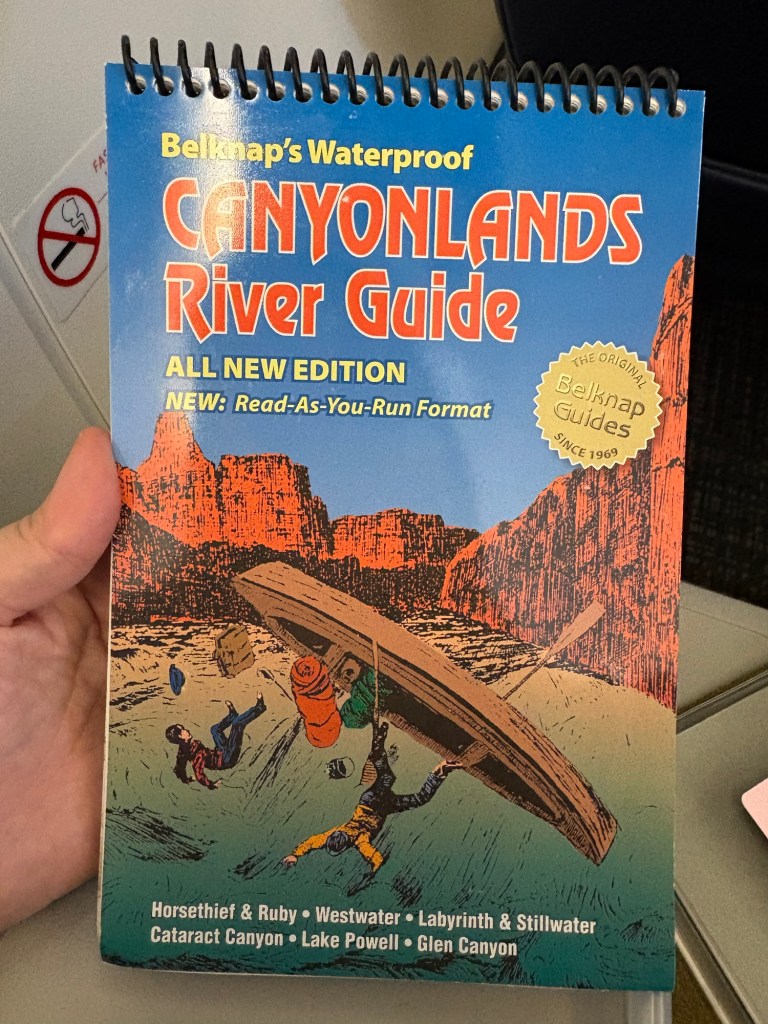
So we did some calculation and adjusted the plan to paddle further on our third day, which would be our first sunny day, and also to do our one day hike to the iconic viewpoint at Bowknot Bend. Tex’s gave us instructions to end our trip one mile further than our original plan, saying it would be more possible to pick us up there. A waterproof map (shown below) made assessing the route changes easier.
With a new plan, we set off in high spirits despite the grey skies and light rain.
The first night
We didn’t really know what to look for as far as landings at the campsites—just that we’d need to pull over at our first planned river mile point. I tracked where we were by counting river bends and reading the topographical features on my paper map. This worked well—I also had the route downloaded on AllTrails but never looked at it.
At one point, we passed what should have been an island but water completely covered it so we ended up running aground. We had to get out of the canoes and drag the vessel back to deeper water to free ourselves. This felt like a challenge in the moment, but in hindsight it’s actually hilarious we thought anything of it at all.
We moved on to look for our campsite. Without knowing what we were looking for, we debated every gap between the shrubs. Could this be it? What about that?Some parts were slightly confusing because, like the island, a lot of what would have otherwise been visible was completely under water. But as we turned a bend where our first campiste was supposed to be, I saw what looked like a narrow set of steps. We snapped into action and paddled like crazy so that we wouldn’t pass it (we nearly did).
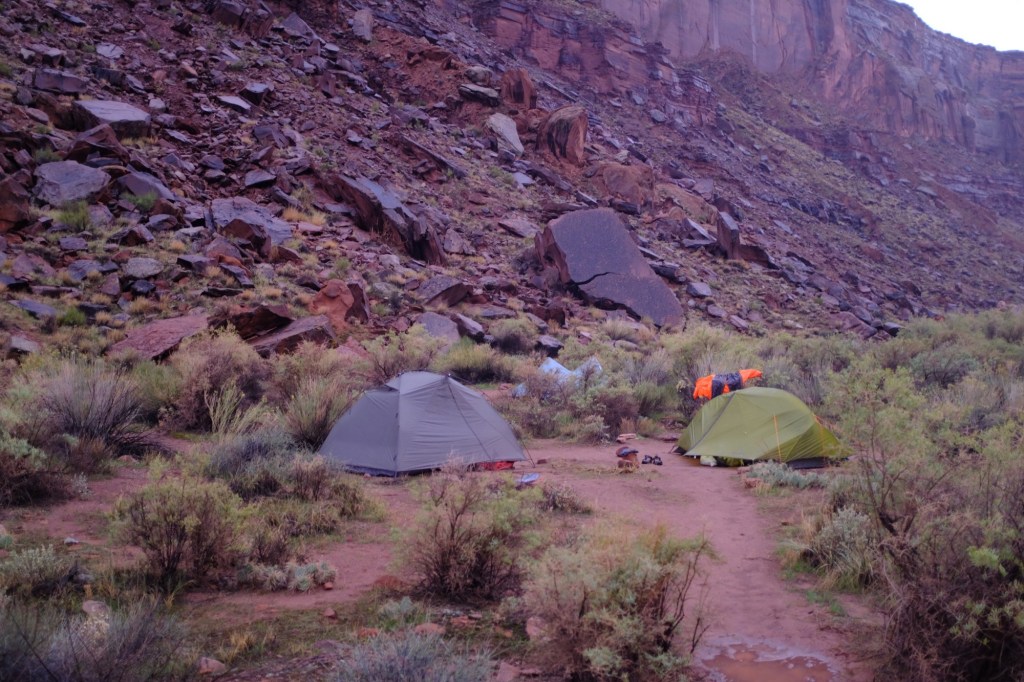
With this being my first non-backpacking camping trip, it was new for me that I didn’t need to carry everything on my back for miles. So we were armed with steaks and some fresh veggies stored in a rented ice chest, and we planned to cook on night one—a luxury I’ve never tried in the outdoors before. That meant we had to lug a lot of cooking equipment and food up a hill to get to the drier, high-ground campsites. There were several cute sites, with cozy tree cover. We debated spreading out or taking up less space in case other campers showed up (they never did).
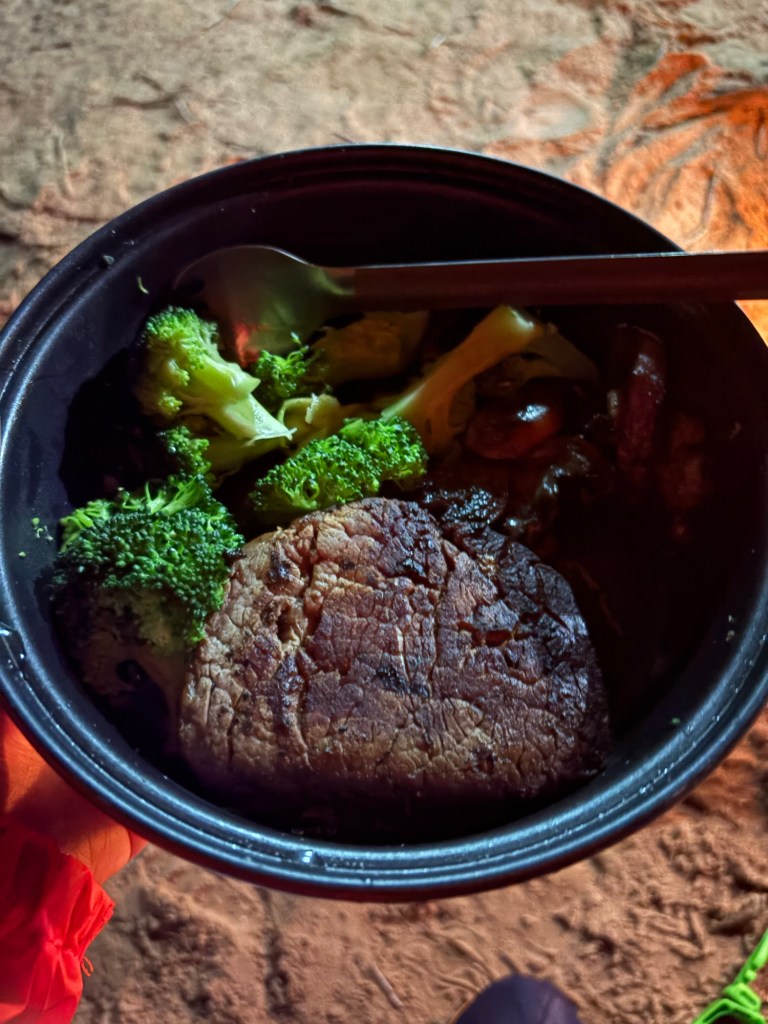
The rain continued as we enjoyed our evening. We saw lightning and counted the seconds between the flashes of light and the thunder that followed. It seemed far away. Then at one point I heard what sounded like a waterfall forming and becoming more intense. Just as I pointed it out to my friends, we looked down and saw a small river of water rolling down the hill toward our campsite and panicked. The water first rushed toward my friend’s tent, then changed course and rushed toward mine, before changing course again and cutting between our sites.
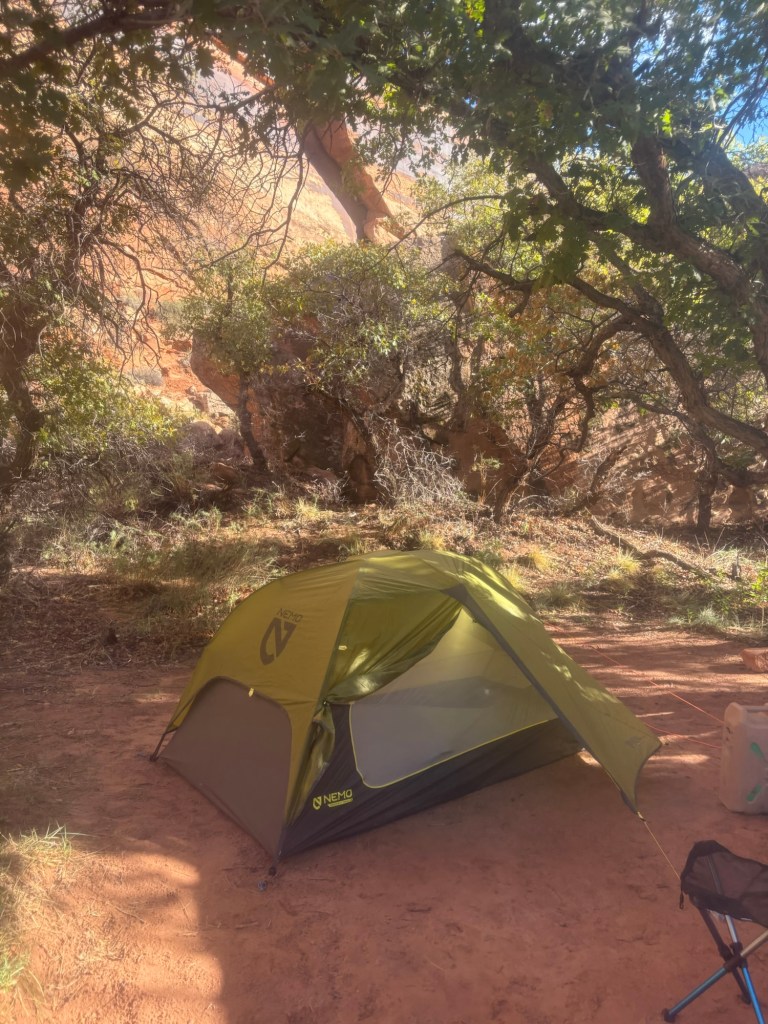
It didn’t seem safe to wait and see if more rain would change the direction of the flow again, so we scrambled to pack my things and move them to slightly higher ground, where my friend’s tent was set up. Luckily, we both stayed dry overnight.
Our plan for the following day was a light one, because our original plan to paddle roughly even distances each day no longer matched the locations of safe campsites. So we got a leisurely start in the morning, though packing up the more elaborate setup and carrying it all back down the hill to reload the canoes was not a quick process. The rain was still coming down on us, but wasn’t heavy.
The second night
Even knowing what to look for this time, it was tough figuring out where our next campsite would be. We were careful to float slowly down the mile leading up to it, but the edges of the river were very overgrown. At one point we got faked out by a beautiful heron emerging from an opening in the brush. We thought it was a sign (it wasn’t).
We thought the steep entrance to our first campsite the previous night was a challenge, which we were about to be proven very wrong about. Approaching what looked like a marsh, with vegetation growing in patches of wet clay spreading out into the water, we bumped up against it a couple of times and even disturbed some large creature, maybe a fish, maybe something else, that rattled the boats. Realizing our entrance was deep inside the marsh and it wouldn’t be possible to just pull up to it, we maneuvered ourselves around until we found a small slot to paddle up against.
As we sidled up to a patch of reedy plants, one of my friends grabbed some to hold us in place, and stepped out of the canoe to get his footing on land. He immediately slipped waist deep into the muddy water and struggled for an intense several seconds to regain his footing to get back on shore. We each then followed, taking turns trying to stay dry but slipping and falling into the mud at various points.
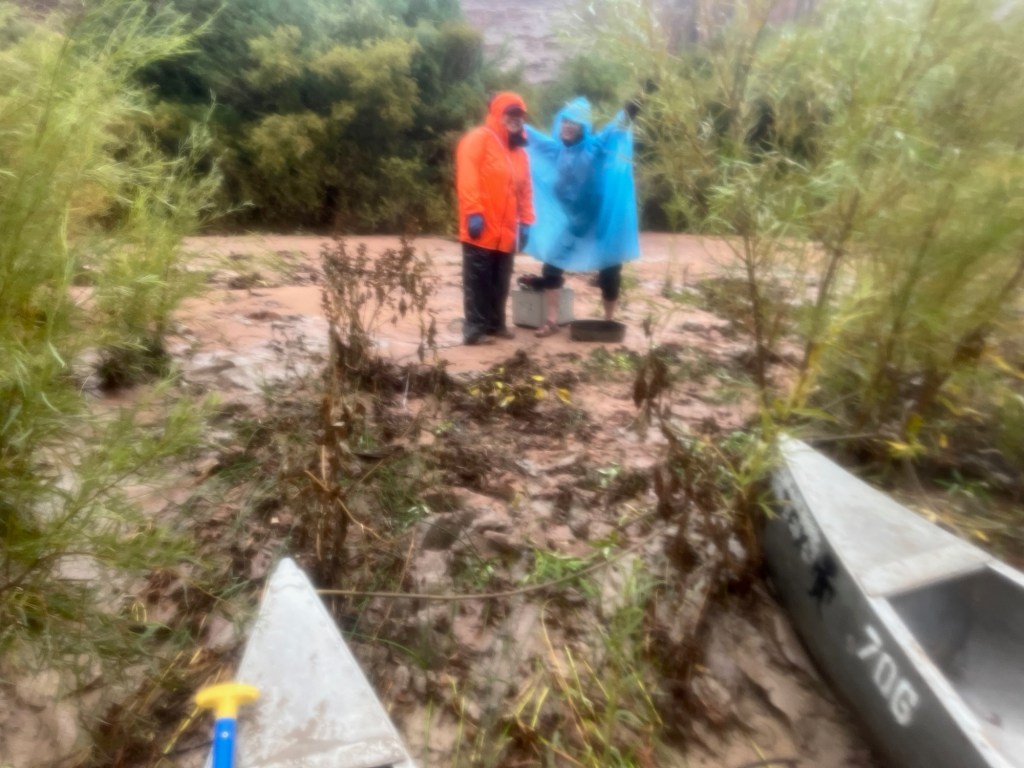
Lugging everything through that mud and up another hill wasn’t a blast, but the campsites this time were at the base of Hey Joe Canyon, which was beautiful. Even better: the skies cleared and the rain let up in the evening. We were able to enjoy s’mores under the stars.
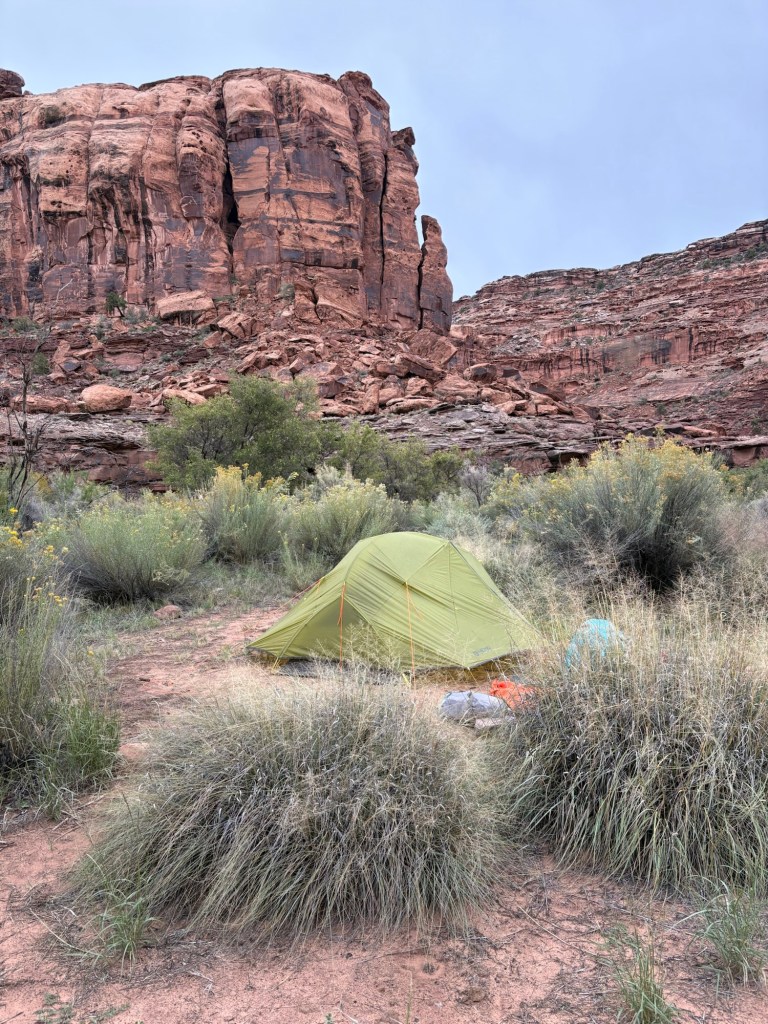
We were all looking forward to the following day, which would be our longest and was supposed to be our first dry day with sunshine. Our plan was to paddle 20 miles with one stop to hike Bowknot Bend, for iconic views of Labyrinth Canyon. So we agreed to an early start.
A tough start to day 3
The sun rose pretty late, probably after 7am. So we got up in the dark and started packing in our tents. I had a few scares from spotting a small scorpion and some spiders on the outside of my tent (some reading this will know I am irrationally terrified of bugs).
But the biggest downer that morning was the weather report, which I’d been checking by satellite twice a day. As of the night before, we were expecting sun. That morning, however, the forecast changed completely, saying we’d get steady rain from 7am to 11pm instead. By the time we packed everything up again, everything was pretty wet.
The river had subsided a bit however, due to the short break from the rain the night before. We thought this was a good thing at first, because it would be slightly easier to get our stuff into the canoes. Then we realized it ALSO meant it would be significantly more difficult to get the canoes back into the water. They were now fully stuck in the mud.
For the next two hours we pushed, pulled, strained, dug, loaded, unloaded, and bickered about how to free the vessels from where they were stuck. Then one of my friends realized our only solution would be to dismantle the T-CAT, separate them, and drag them out one by one. That worked. We did however end up fully covered in mud again. The entire experience was pretty much terrible. Zero out of ten. Do not recommend.
Then it got worse
We put the canoes back together once we got them floating, and began our tedious day of paddling in the rain. As we hit a rhythm, one of my friends reached for something from the back and accidentally dropped his valuables into the water. As he tried to save them, he fell in himself and was fully submerged in the cold river. He was able to get back into the canoe, but was soaked through every layer of clothing. In 50 degree weather and consistent rain, this was dangerous because it put him at risk for hypothermia.
As we paddled on, all three of us were soaked and shivering. We were too cold to stop paddling and eat the calories we needed to warm up. The rain found ways to drip into my waterproof jacket, accumulated in my sleeves and down my back, and my insulation layer was so wet it felt like I was sitting in a bucket of water. My hands and feet started to go numb, and that numbness started creeping up my legs. My friends, who had fewer layers on than I did, probably felt worse. Needless to say, we skipped the hike.
My consistent worry was whether I was making the right judgment call by not calling search and rescue. People often wait too long and call when it’s too late. And because we had to paddle 20 miles that day, it felt endless and so did the rain. It didn’t let up for even a second the entire time we were on the water—it just alternated between steady rain and pouring rain.
We would hear pieces of the canyon breaking off and crumbling and crashing down under the weight of the water. The river got harder to read because it widened as it rose and continued to covered the small islands that were supposed to be visible. It’s possible my mind wasn’t at its sharpest at this point as well.
We gamed out our landing. The plan was for my friend to fish his fire kit out of his bag and to leave most of our stuff behind when we got to camp, so we could focus on collecting twigs and firewood to make a fire and dry off. The landing was less messy, so we did just that; but we arrived shivering and under severe cold stress. One friend went off on her own and had a panic attack. I was non-verbal, though able to stumble around and collect wet twigs for my other friends to make a fire. Miraculously, and with the help of a fire starter, he was actually able to do it.
We went back to fetch the rest of our things, I pitched my dripping wet tent, crawled inside, removed all my wet clothes, and spent the rest of the evening trying to get my body temperature back to normal and regain feeling in my hands and feet. I sent a text to my mother via satellite with a fib that things were fine and that I loved her, which triggered a release of the overwhelming emotions I’d apparently been bottling up the entire time, and I cried in my tent.
I didn’t emerge from my tent again that night. In addition to being cold I didn’t have it in me to talk. In the distance, I continued to hear the loud crashes of rock slides.
The last day
The next morning would be our last on the river and we needed to paddle the final five miles to the point where we’d exit the river and catch a ride home. My friends made a plan to skip coffee and breakfast the next morning, and just pack up and go early so we’d be sure to make our pickup time.
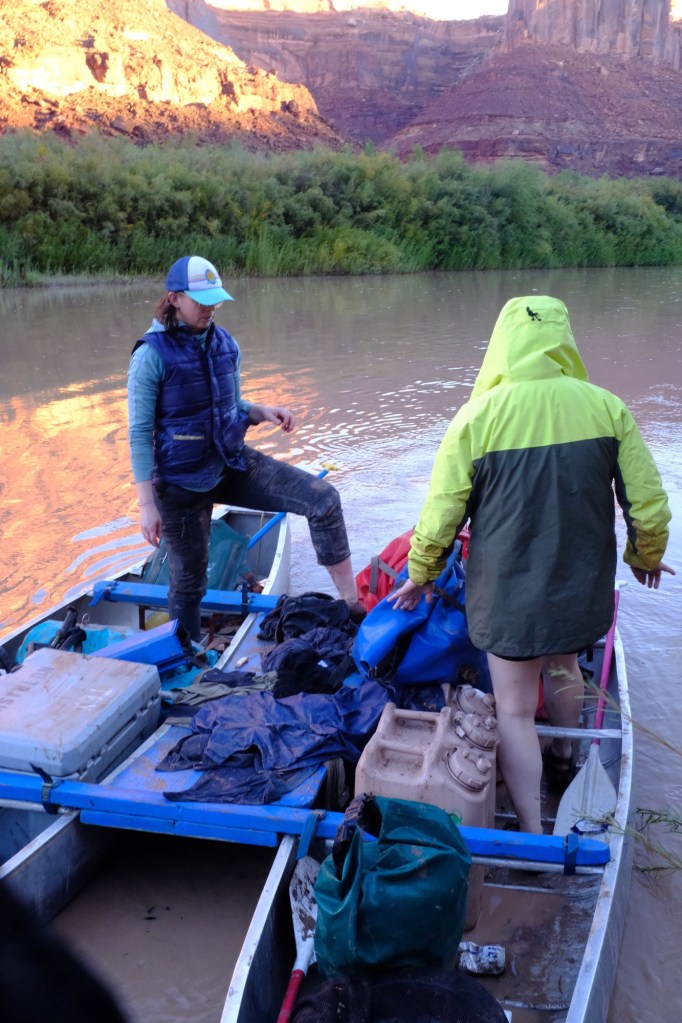
The morning sun was beautiful—especially after not seeing the sun at all for days. The canyons glowed as a reminder of the epic views we could have enjoyed but paddled past the day before as we struggled to stay safe.
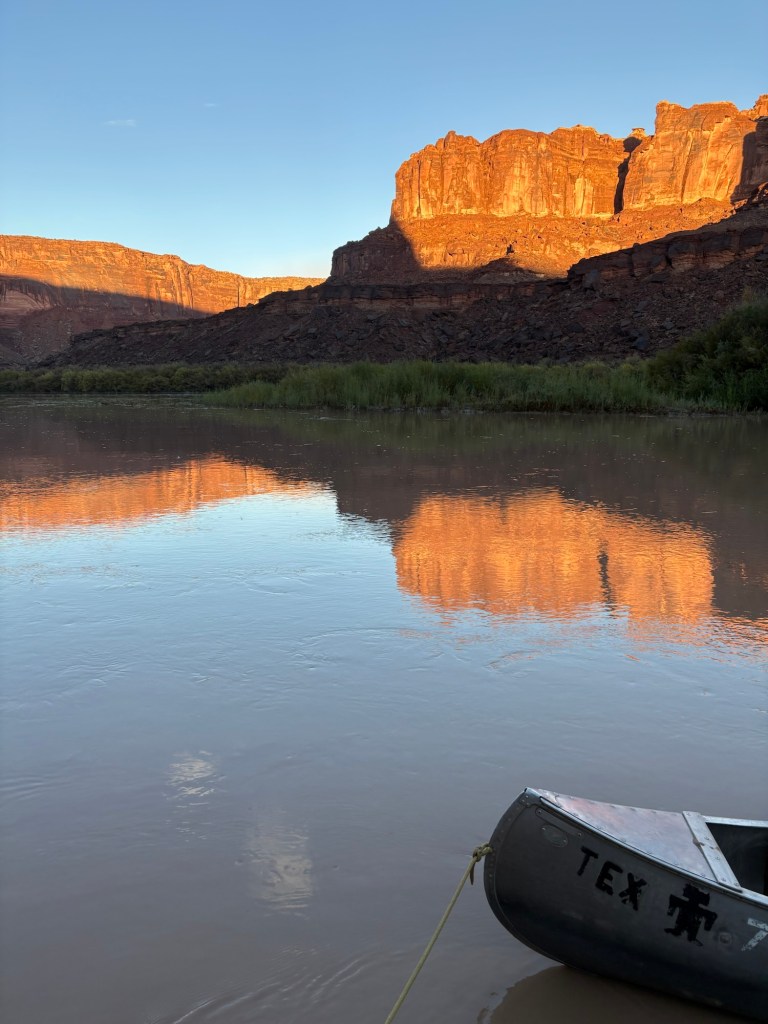
We enjoyed the sunshine during those last several miles. At our final landing, we were so nervous to miss it that one of my friends dove out of the canoe to catch it and ended up wet again. But we made it!
It ain’t over till it’s over
We took the canoes apart again, and took about an hour to move everything including the canoes themselves inland to the pickup spot. It was a lot to carry. One of my friends dumped out the remaining jug of water we had to reduce our carry weight.
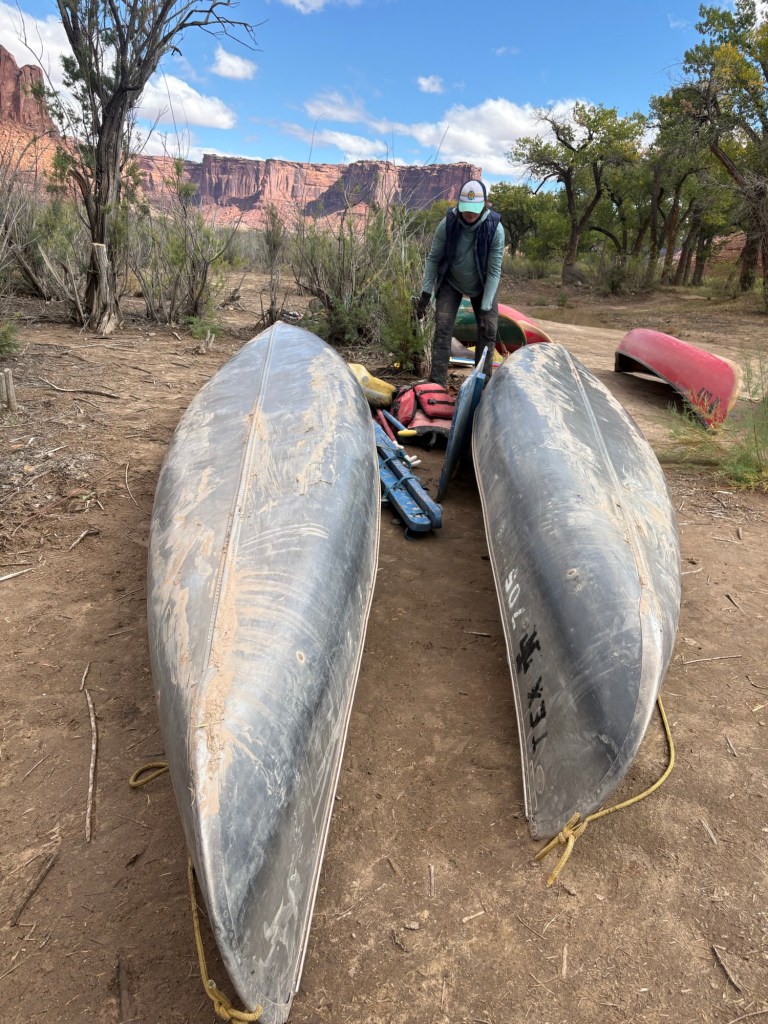
There were other canoes, and piles of gear all around at the pickup area, but no other people. We didn’t really question it at first and celebrated the end of our journey with some coffee and breakfast. Our shuttle was scheduled to meet us at 11:00am.
At close to 11, a park ranger appeared on foot to ask us what we were doing there and saying we couldn’t stay. We explained that we were waiting for a shuttle, to which he responded with the devastating news that no shuttle would be able to get to us—floods had turned the access road into a lake.
To our dismay, he suggested we could get back on the river and paddle to ANOTHER stop that might be accessible by road. I don’t think any of us could even process that, but while I had planned for our travel extension contingencies, we no longer had water. We did have backup water filtration systems but they were suboptimal solutions because the river was so muddy.
We debated our options, and landed on walking to the road to meet the shuttle that was supposed to get us, and ideally convincing them not to leave us behind even if it meant leaving the canoes behind. This would of course require us to carry our things to the road, which caused some consternation, but it was the next best option since none of us wanted to stay in the wilderness another night.
As of noon the shuttle didn’t show. The number Tex’s had given me at the start of the trip wasn’t their’s, but an emergency line to the sheriff’s office. One of my friends suggested I satellite message someone who could call Tex’s for me to let them know our situation and ask for a number I could reach them. I messaged my mom, who saved the day but also freaked out because, according to her, my message (which started with “Is anyone there? I need some help please”) popped up as a notification with an image of a topographical map showing high mountains with an icon indicating I was in a hole. Technically speaking, I was in a canyon so that was kind of accurate.
Clare from Tex’s wrote back and assured us we would get picked up, but the shuttle was running late, and that we could start schlepping our stuff from the pickup point near the water, around the detour to the road. She was sweet and also kept in touch with my mom who was very anxious by that point. My friends set off to start moving our stuff while I stayed behind to wait for the shuttle.
I can’t describe my relief when I saw the van approach. Ari, who also drove us to the launch point days earlier, was a sight for sore eyes. She informed us that the other stuff at the pickup point was the abandoned gear of a large group that ended their trip two days earlier and were similarly stranded. We were going to have to lug all of their stuff to the road as well, because Tex’s needed to get it back to the group. We spent the better part of the afternoon helping to move it all. It was grueling, but much better than being on the brink of hypothermia.
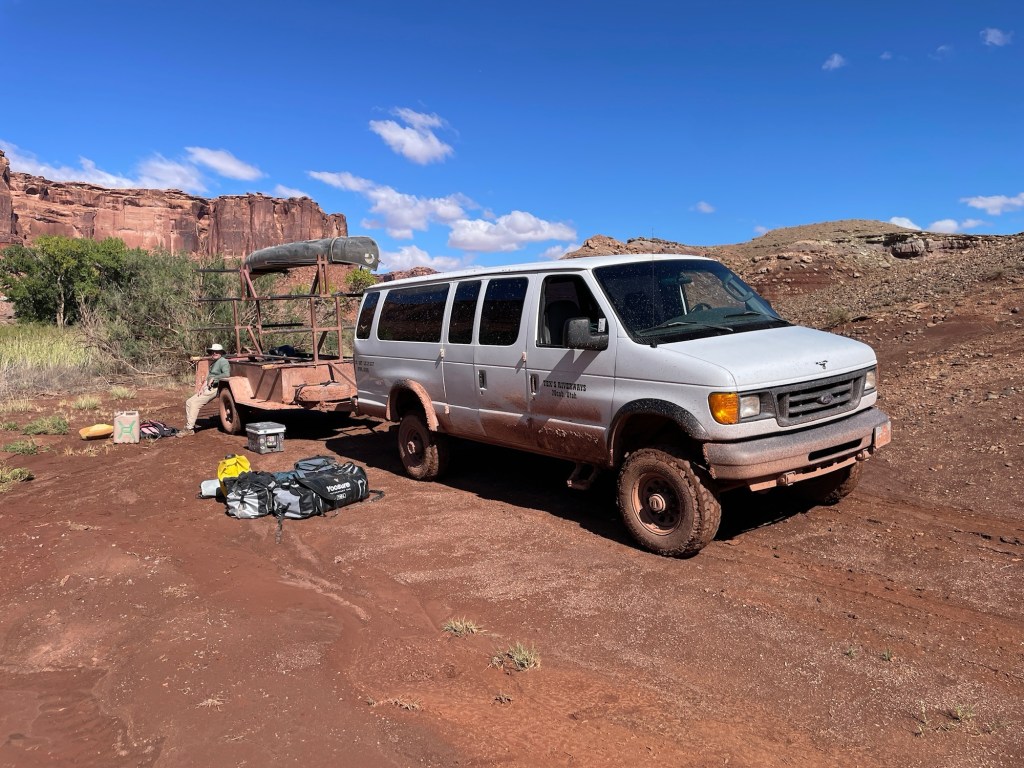
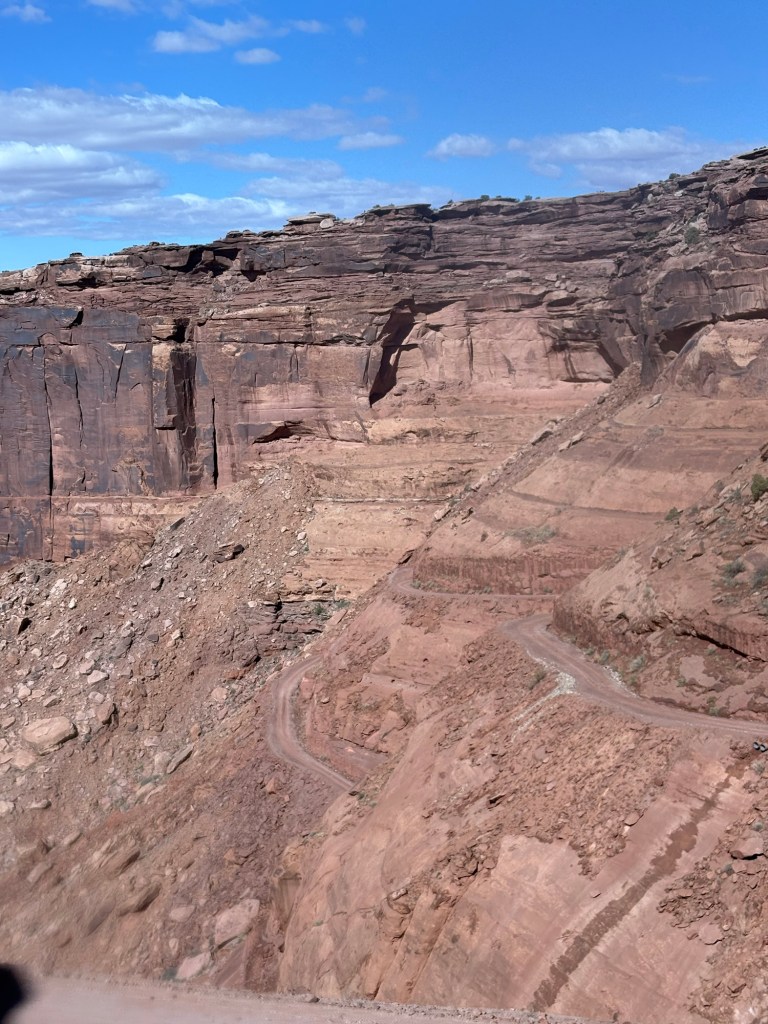
The drive back to Moab was a breathtaking and mildly scary drive up the canyon. I’d learned by then not to be relieved to soon so I waited until we got on a paved highway to let myself feel safe again.
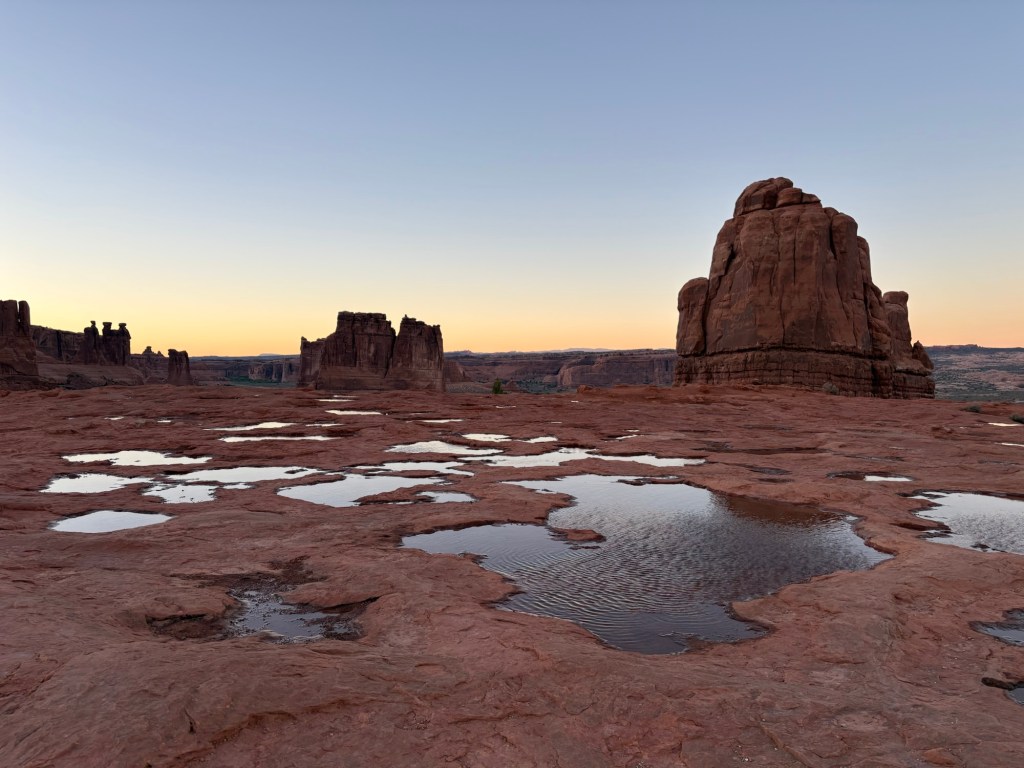
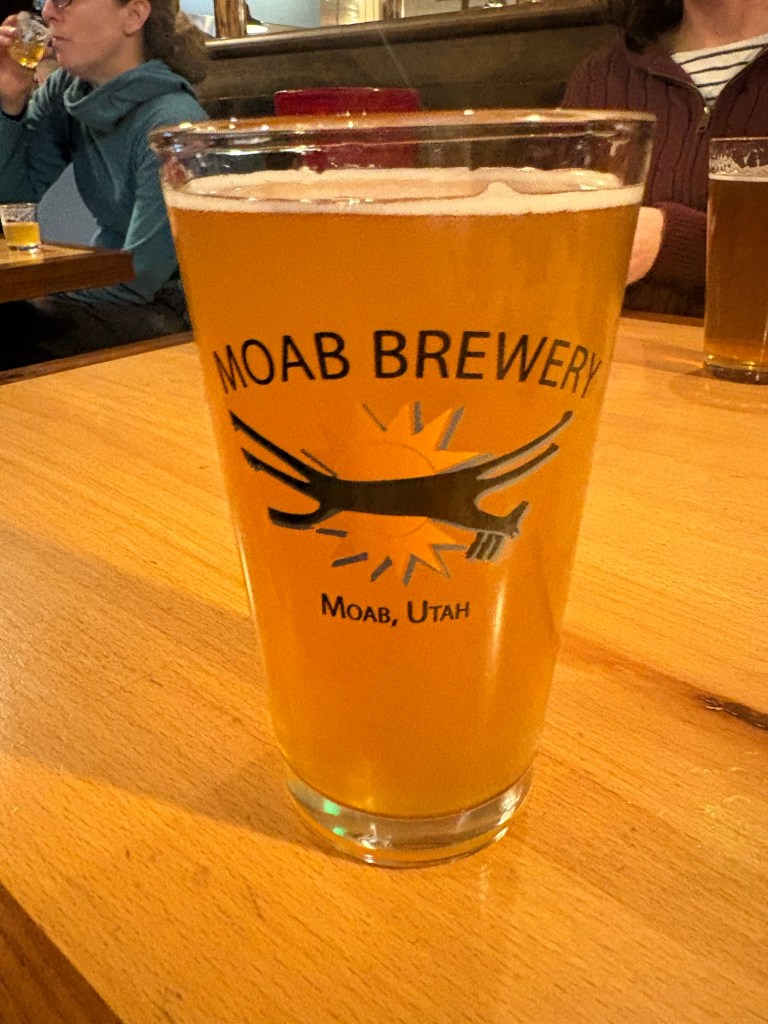
We got back to Moab in something of a daze, loaded our stuff back into the rental car, and ended our trip with a stop at Arches National Park to see the sunset and at Moab Brewery for dinner. I then spent the remainder of the night washing my muddy clothes and rinsing and drying my muddy gear in the hotel bathroom.
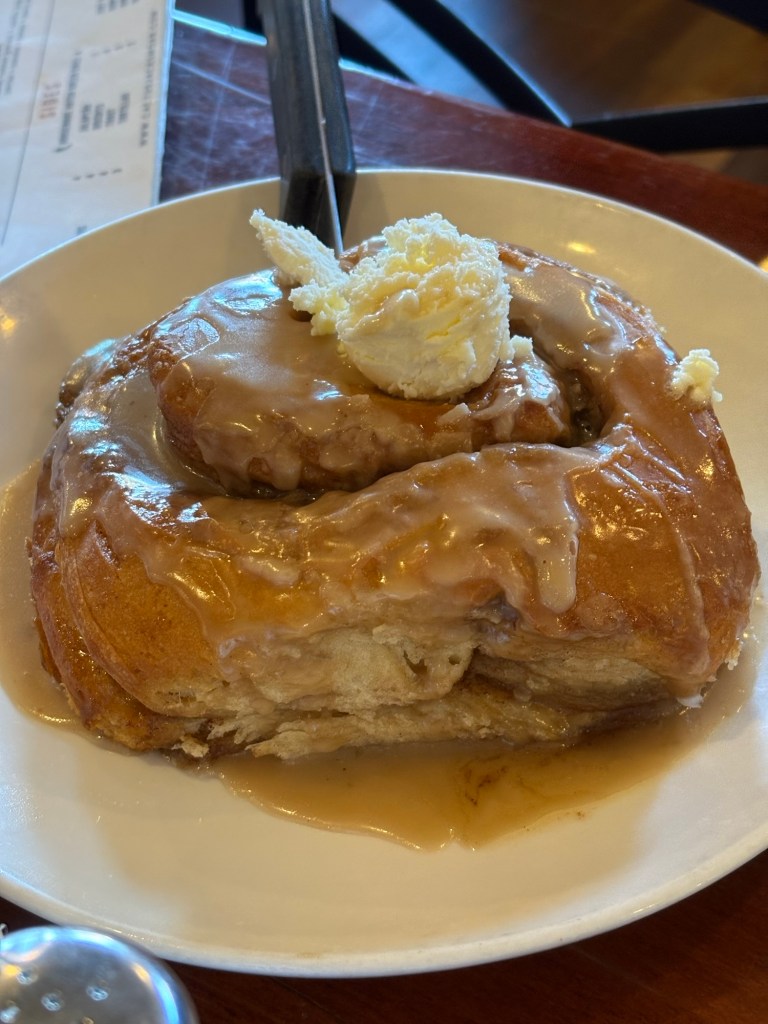
We had breakfast at Cactus Jack’s the next morning, including their giant cinnamon bun which was pretty impressive. Luckily for us, the drive and flights back home the next day were uneventful.
The moral of the story
I don’t know if I’ve fully processed the trip yet. It’s bizarre to be back worrying about work and living my routine as if I wasn’t struggling in the wilderness, questioning my life choices and unsure if I’d make it out just a week ago. We were told on the way back to Moab that the river conditions were the worst they’d seen since 2010 (16 years ago).
I was never an outdoorsy person and this trip was a humbling reminder of why I never understood people who voluntarily put themselves through situations like this. Was it cool to be completely disconnected and to marvel at the amazing geology around the Green River? Sure. Was it fun at points? Yes. Was it worth it, in these crazy conditions? For some maybe, but I think for me the answer might be no. There were lessons learned, though. And I think for the most part it may have been a decent success as far as putting my planning skills to the test.
Does that mean I’ll never canoe camp again?
I honestly don’t know. For now, I hope my next vacation will include a bed, a roof, a shower and a thermostat.



Leave a Reply